Harvard Business Review recently published a compelling article on the importance of mentoring in the age of AI. To be clear, I'm a huge fan of AI. I use it daily and believe it will transform business, leadership, and society in many positive ways. So please don't misread the headline.
The article's core observation is simple but profoundly important - AI is increasingly automating the very tasks through which professionals have traditionally learned their craft. Analyzing reports, evaluating arguments, interpreting ambiguous data, prioritizing competing demands, and anticipating stakeholder concerns have never been "just tasks." They have been the training ground where judgment, intuition, and business acumen are developed.
In two months, I will celebrate 25 years as a Managing Director. During that time, I've also worked in executive search, mentoring, leadership consulting, and advisory services, interviewing and supporting close to a thousand leaders, board members, and specialists across the Nordics and Europe.
One thing has become very clear to me: the best leaders are rarely the ones who know the most. They are the ones who understand the most.
They continuously learn, adapt, and evolve. They see the bigger picture, make decisions under uncertainty, identify risks before they surface in reports, and read people and organizations remarkably well. These capabilities aren't learned in a classroom. Nor are they learned from an AI chat. They're developed through experience, successes, failures, reflection, and the right mindset.
The HBR article highlights a real risk: if AI removes a significant share of everyday learning opportunities, organizations may weaken their future leadership pipeline. Online courses and training programs alone cannot transfer judgment, tacit knowledge, decision-making capability, or the accumulated wisdom experienced leaders have built over decades.
This is why mentoring is becoming more important than ever — but not just any mentoring. According to the article, the best outcomes come from mentoring that is intentional, structured, and tied to the development of specific capabilities. Organizations should clearly define which competencies are being developed, how progress will be measured, and how mentors themselves will be supported in their role. In my view, this process should begin as early as a leader's onboarding journey.
One idea from the article particularly resonated with me: experienced leaders need to make their thinking visible. Not just explain what decision was made, but why. How were the alternatives evaluated? What risks were considered? What assumptions were challenged? What uncertainties remained?
This transfer of tacit knowledge is exactly what develops the judgment and decision-making capabilities of future leaders — and it's not something AI-driven efficiency does on its own. Organizations must think much more deliberately about how experience, leadership, judgment, and institutional knowledge get passed to the next generation, and how to create something genuinely distinctive in a world where everyone increasingly has access to the same tools.
We see this challenge every day at Birn+Partners. Today, we operate across 12 European countries, serving clients throughout the continent. We work closely with leaders, executive teams, boards, and future key talent, supporting them not just through executive search, but through mentoring, coaching, leadership team development, executive assessment, interim management, board development, and a wide range of organizational transformation initiatives.
Increasingly, our conversations with clients are no longer centered on skills gaps alone, or even solely on transformation and strategy execution. Instead, they focus on building organizational resilience, strengthening leadership judgment, improving decision-making, enhancing collaboration, and developing the ability to lead through uncertainty. In other words, we're helping organizations strengthen the very human capabilities whose value is rising at the same pace as AI capabilities themselves. We also help clients develop leaders who can use AI more effectively as part of their daily work and decision-making.
In a world where knowledge is becoming partially democratized at unprecedented speed, expertise alone is no longer a sustainable competitive advantage. The most valuable capabilities will be the ability to learn faster than competitors, make sound decisions under uncertainty, build trust, and lead people through constant change.
AI is a remarkable tool. It's already making many leaders more productive and effective, and it has the potential to multiply human capability in extraordinary ways. Interestingly, the World Economic Forum's Future of Jobs reports consistently show that the fastest-growing skills aren't only AI-related technical competencies — among the most important are analytical thinking, resilience, adaptability, creativity, influence, leadership, and lifelong learning. In other words, the very human qualities that mentoring, coaching, and leadership development are designed to strengthen.
AI can quickly turn average work into good work. But it doesn't yet turn good work into exceptional work. Exceptional work still comes from human creativity, experience, insight, courage, curiosity, and the ability to see connections that algorithms don't.
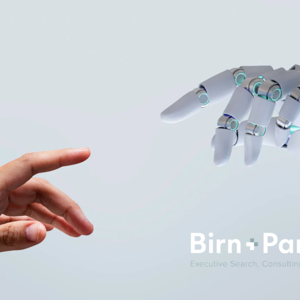
If every organization uses the same tools in the same way, the world will soon start to look very similar. In many ways, it already does. That's precisely why original thinking, diverse experience, mentoring, coaching, leadership development, and meaningful human interaction will become even more valuable in the years ahead. The future doesn't belong to those who choose between AI and people. It belongs to those who learn how to combine the strengths of both.
Source: Why Mentoring Matters More in the AI Era by Marlo Lyons. July 24, 2026. Harvard Business Review. https://hbr.org/2026/07/why-mentoring-matters-more-in-the-ai-era
/Mona-Maria Ilola, Managing Director Finland & Benelux